DefinitionWhat OEM identifies
An OEM label is most useful when it is supported by evidence: a vehicle-maker part number, manufacturer label, casting or stamping, supersession record, package identity, or reliable application information. A familiar logo or a broad compatibility claim should not replace those checks.
Original-equipment specification may matter for complex geometry, electronics, software, lighting features, body-panel fit, safety-system interfaces, cooling configuration, or drivetrain design. Aftermarket alternatives can also be appropriate for many repairs, but they should be evaluated by manufacturer, application, construction, included pieces, and installation requirements rather than compared by label alone.
Repair contextWhen customers ask for OEM parts
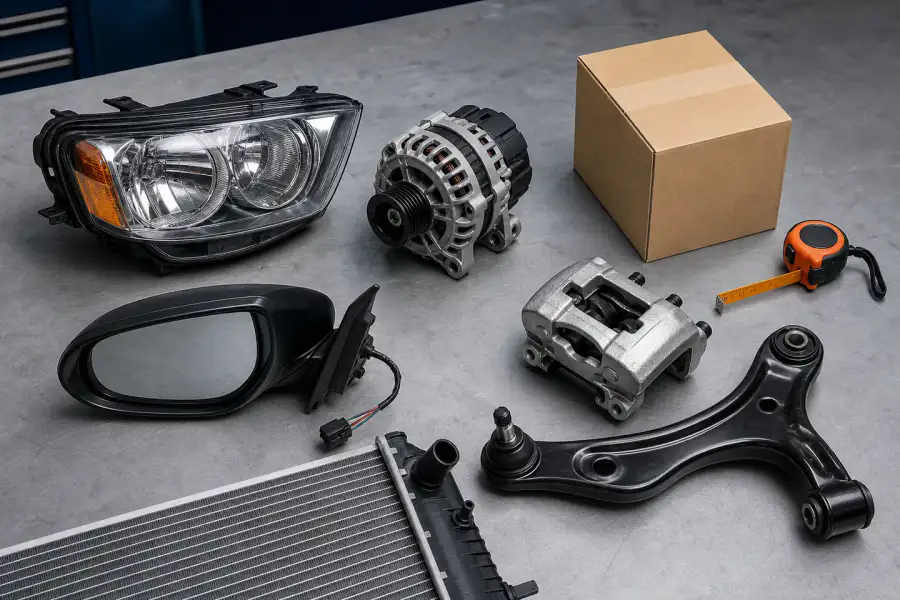
Customers often ask for OEM engines, transmissions, wiring harnesses, electronic modules, headlights, tail lights, mirrors, body panels, cooling assemblies, infotainment equipment, and trim when original geometry, connectors, programming, or appearance matters. The repairer may also specify an OEM number to resolve multiple versions of an assembly.
A current OEM number may supersede the number printed on the original component. That can be a valid replacement path, but a supersession may include production notes, required hardware, software changes, or a kit. Confirm the full application and installation requirements instead of treating any number change as automatic compatibility.